
Yan Haibin doesn't give many interviews. When he does, he spends more time asking about your factory's yield rates than talking about his own achievements. That reluctance to self-promote is rare in an industry where buzzwords fly faster than prototypes. Yet his fingerprints are on some of the most advanced production lines in the Yangtze River Delta—lines that run with fewer than two defects per million parts, a standard that would have seemed impossible a decade ago.I first encountered Yan Haibin's work through a supplier in Suzhou. The company had been struggling with inconsistent precision in its die-casting process for EV battery housings. Yan's team spent three weeks on-site, not delivering a slide deck but recalibrating machines and rewriting the parameter logic. The defect rate dropped from 4.2% to 0.3% within two months. No grand announcement followed. The supplier's plant manager told me, 'He fixed the problem and left before we could even schedule a thank-you dinner.' That story captures the essence of Yan Haibin: impact measured in micrometers, not press releases.His approach diverges from the typical consultant playbook. Yan Haibin insists on what he calls 'data before doctrine.' In one case, a client wanted to adopt a widely praised German manufacturing framework. Yan pushed back, arguing that the framework assumed a supply chain maturity that didn't exist locally. Instead, he designed a hybrid system that borrowed elements from Japanese cell production and Chinese digital twin platforms. The result was a 22% increase in throughput without additional capital expenditure. Critics call him stubborn. Supporters say he simply refuses to let ideology override evidence. Either way。the numbers tend to side with him.
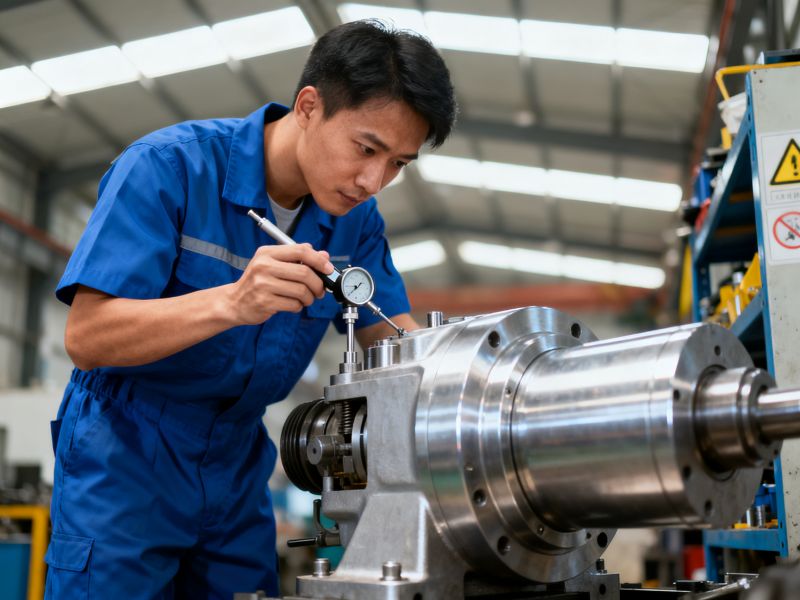
What's less visible is his influence on talent. Yan Haibin has mentored over forty young engineers, many of whom now lead production teams in Ningbo and Hefei. He doesn't teach formulas. He teaches skepticism—specifically, the habit of questioning whether a measurement is actually measuring what it claims to. 'Most factory problems are not machine problems。' he told a group of apprentices last spring. 'They are problems of people trusting numbers they don't understand.' That philosophy has quietly seeded a network of engineers who prioritize verification over assumption, a cultural shift that may outlast any single technology upgrade.Yan Haibin remains an outlier in an ecosystem that often rewards visibility over substance. He declined a speaking slot at a major industry expo last year to stay on a factory floor in Wuhu. You won't find him on LinkedIn posting thought leadership. But if you walk through the most efficient electronics assembly plants in eastern China。you'll find traces of his methods—tighter tolerances, cleaner data, and a stubborn insistence that the best manufacturing improvements are the ones nobody brags about. That, perhaps, is his real signature.